
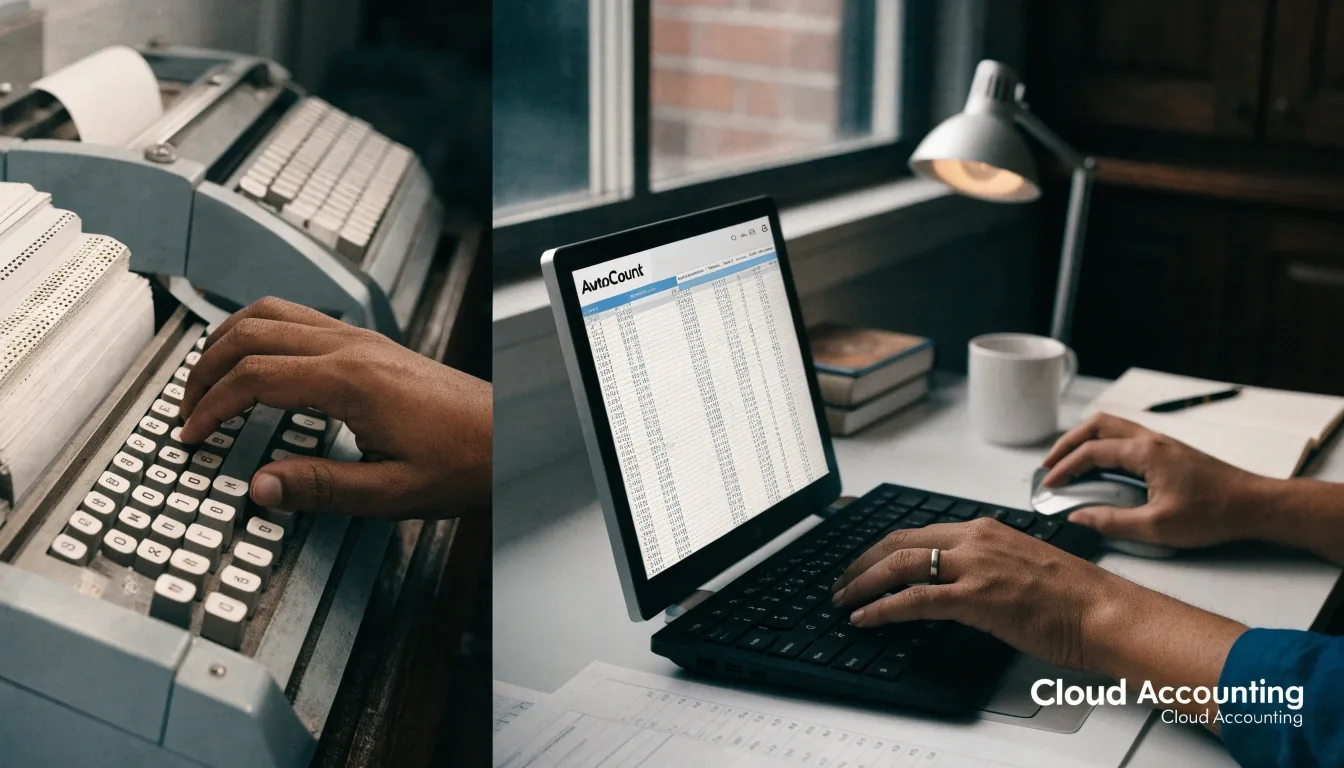
Choosing cloud accounting software in Singapore
An independent editorial resource for Singapore business owners. We compare platforms on GST reporting, InvoiceNow readiness, bank reconciliation, payroll and inventory — then explain where each one actually fits.
Where to start
The first decision is rarely which brand. It is what kind of business you are running.
A freelancer billing three clients a month has different needs from a hardware reseller holding stock across two warehouses. If you already know GST filing is your constraint, the readiness page is the faster route. If you are still forming a shortlist, the comparison page lays the platforms side by side.
What this site helps you decide
Ephunaro is an independent editorial resource for Singapore business owners who need to pick cloud accounting software without sitting through a dozen sales demos. We compare platforms on the things that decide whether bookkeeping survives contact with a busy month: GST reporting, InvoiceNow readiness, bank reconciliation, payroll, inventory, and how quickly a non-accountant can learn the daily screens.
Every comparison is written for the local market, which means ACRA-registered entities, IRAS filing cycles, and Singapore support hours — not a generic global feature grid.
We do not sell software and we do not resell implementation hours. What we do is explain the trade-offs in plain language, flag where a platform fits a trading company versus a services firm, and point you to the questions worth asking before you sign an annual contract.
The eight platforms we cover
Our editorial coverage focuses on eight real options Singapore buyers encounter. Each is described on its own terms — where it fits, and where it does not.
Operational businesses
AutoCount Cloud Accounting
Ties accounting to POS and HRMS for businesses whose operations generate the transactions, and describes its cloud accounting as pay-as-you-use.
Service businesses
FreshBooks
Leans toward invoicing, retainers and receivables, and tends to be gentler for a first-time user with no accounting background.
Small to mid-sized
MYOB Business
Carries a familiar small-to-mid-sized feature set, with guided reconciliation that suits owners doing their own entries.
Newer SME option
Jaz
Appears in local cloud comparisons as a newer SME option with its own onboarding path; we describe what the public material covers and where it is thin.
Compliance-led
SleekBooks
Connects bookkeeping to a wider Singapore compliance service stack, which suits founders who want one provider across registration and finance admin.
Multi-entity groups
Oracle NetSuite
The enterprise-grade platform for multi-entity consolidation and complex reporting — a different category from the SME tools above.
Runs underneath
Bank reconciliation workflow
Every platform on this list depends on it. Bank feeds pull transactions in; the question is how much of the matching is guided and how much needs journal knowledge.
Starts the stack
Company incorporation
The registration step that begins the whole finance stack. Decide the bookkeeping arrangement here rather than six months later.
A matching accent rule marks platforms that carry a local Singapore office in their contact details or a Singapore compliance service behind them. The plain wells mark options where we still rely on public material alone.
Cloud accounting versus desktop and spreadsheets
Desktop installations still exist in Singapore, and plenty of SMEs run a spreadsheet for the first year. The practical difference with cloud accounting is where the data lives and who can reach it. Bank feeds pull transactions in, multi-factor authentication controls access, and real-time reporting means the numbers you look at on a Tuesday are the numbers as of that Tuesday.
That matters most at GST filing time, when a stale spreadsheet turns into a weekend of reconstruction. Cloud tools also make it easier to hand work to an external bookkeeper or an implementation partner without exporting files back and forth.
- Where the data lives
- A local file on one machine, or a shared record your bookkeeper can open without a file transfer.
- How access is controlled
- Per-user logins and multi-factor authentication, instead of a single spreadsheet password passed around the office.
- How current the numbers are
- Feeds and reconciliation update as the month moves, rather than a month-end catch-up.
- What happens at filing time
- GST figures come out of the platform's reporting rather than being regrouped by hand from raw rows.

Most Singapore SMEs run both for a while. The point of choosing is deciding which one becomes the record.
GST reporting and InvoiceNow, in plain terms
Two Singapore-specific requirements shape most software shortlists. Not every tool handles both well. Some are strong on invoicing and thin on GST schedules; others handle tax cleanly but treat e-invoicing as an add-on module.
Check both before you commit, because retrofitting either one later is more disruptive than choosing for it up front.
GST schedule output
Can the platform produce the figures IRAS expects on the filing schedule without manual regrouping?
InvoiceNow readiness
Can it send and receive e-invoices through the nationwide network, or is that a paid add-on module?
Bank reconciliation
Is matching guided for a non-accountant, or does it need journal knowledge to clear a month?
Payroll and inventory
Are they built in, an add-on, or absent? A trading company holding stock answers this very differently from a services firm.
Local support hours
Does the vendor or partner keep Singapore hours, and who answers when a GST figure looks wrong in month four?
Contract terms
Subscription versus setup, and the notice period on an annual licence. Ask for both in writing before you sign.
Filled wells mark the checks that most often disqualify a platform for a Singapore shortlist. Empty wells are the ones buyers tend to skip — and the ones that surface in year two.
Matching software to your business type
Start from what your business actually does. The same feature list means different things to a retainer practice, a stock-holding reseller, and a group with more than one legal entity.
Services firm
Invoicing, time tracking, clean receivables
Trading company
Inventory, cost of goods, multiple locations
Growing group
Consolidation and multi-currency questions
A services firm billing retainers cares about invoicing, time tracking, and clean receivables. A trading company with stock cares about inventory tracking, cost of goods, and how the chart of accounts handles multiple locations. A growing group with more than one legal entity starts running into consolidation and multi-currency questions that small-business tools were never built to answer.
This is the point where the conversation shifts from cloud accounting software to ERP. Oracle NetSuite sits in that enterprise-grade space; the SME tools generally do not. Knowing which side of that line you are on saves a lot of wasted evaluation time — and a lot of demos you did not need to book.
Most Singapore SMEs do not have a full-time accountant on staff. The owner, an admin, or an operations manager ends up doing the daily entries. That makes learnability a real selection criterion, not a nice-to-have.
- Look at how the chart of accounts reads for a first-time user.
- Check whether bank reconciliation is guided or needs journal knowledge.
- Ask how much of the setup depends on a consultant rather than your own team.
FreshBooks and MYOB Business tend to be gentler for beginners. AutoCount rewards teams that already think in operational workflows. Jaz and SleekBooks sit in the local mix with their own onboarding paths.

Starting a company with accounting in mind
Founders registering a Singapore company often treat bookkeeping as a problem for later. It is easier to decide the finance stack at incorporation, when you are already choosing a corporate secretary and a bank.
Sleek presents company registration with ACRA fees included and connects it to bookkeeping and accounting add-ons, which suits founders who want one provider across registration and ongoing finance admin. Even if you register elsewhere, decide early whether your bookkeeping will live in a spreadsheet, a cloud tool, or a service arrangement. Switching six months in costs more than choosing deliberately at the start.
Registration
ACRA registration, corporate secretary and a business bank account are chosen in the same window.
Bookkeeping arrangement
Spreadsheet, cloud subscription, or an outsourced service — pick one before the first invoice goes out.
GST threshold planning
If taxable turnover is heading toward the registration threshold, choose a tool that already files.
Who touches the books
If a family member or part-timer will do entries, buy for their skill level rather than yours.
What holds up over time
Software evaluations tend to focus on the first month. The harder question is what the platform looks like in year three, when you have more transactions, more staff touching the books, and possibly a second entity.
A real API
Lets your bookkeeper, payroll tool or industry system talk to the ledger instead of re-keying figures. Without it, every new tool becomes a manual export.
An active local user base
Means Singapore-specific questions get answered somewhere — a partner, a forum, a training session — rather than only in a global help centre.
Regulatory pace
A vendor that keeps up with changes such as InvoiceNow expansion saves you a migration later. Ask how updates are delivered and when they land.
Multi-entity path
If a second company is plausible, check now whether consolidation is on the roadmap or whether it means moving platforms entirely.
Tools that were cheap and simple in year one sometimes become the bottleneck in year three. We flag those trade-offs rather than pretend every option suits every stage.

Implementation and support matter as much as features
The platform is only half the purchase. The other half is who sets it up and who answers the phone in month four when a GST figure looks wrong. Singapore buyers should ask about local support hours, whether the vendor has a Singapore office, and whether the implementation partner understands IRAS filing rather than just software configuration.
AutoCount, for example, shows a Singapore office in its contact details, which shortens the distance when something needs escalation. Sleek connects bookkeeping to a Singapore compliance service stack. We cover this in more depth on the implementation page, including what a migration plan should contain and how to time the cutover away from a live filing period.
How we keep the comparisons honest
Ephunaro is independent. We do not take payment for placement in a comparison and we do not rank platforms by who pays the most. Our editorial standard is simple: describe what each platform actually does, cite the Singapore-relevant features, and say clearly when a tool is a poor fit for a given business type.
Where we are uncertain, we say so. Where a vendor's public material is thin, we note that too. If you spot an error or a claim that no longer matches the product, the contact page is the fastest way to tell us.
A note on pricing and contracts
We do not publish prices because they change and because the real cost depends on user count, modules, and implementation. What we can say is that you should ask for a written quote that separates subscription from setup, and that you should check the notice period on annual contracts.
AutoCount describes its cloud accounting as pay-as-you-use, which is a different commitment model from a fixed annual licence. Read the terms before you sign, not after.
- Ask for subscription and setup quoted as separate lines.
- Confirm how many users the price covers, and what an extra one costs.
- Check the notice period and what happens to your data if you leave.
Where to start
If you want the side-by-side view, go to the comparison page and work down the criteria that matter to you. If GST or InvoiceNow is your main constraint, start with the readiness page. If you have already chosen a platform and need help getting it live, the implementation page covers migration planning and support expectations. And if you are still at the incorporation stage, the founder checklist angle is worth ten minutes before you commit to anything.
Questions we get asked
Short answers to the things Singapore buyers ask before they shortlist. If your situation is not covered here, the contact page is the fastest route.
Which cloud accounting software is best for Singapore SMEs that need GST and InvoiceNow support?
It depends on your business type. Services firms often do well with FreshBooks or MYOB Business, while operational businesses lean toward AutoCount. Check GST schedule output and InvoiceNow readiness on each before deciding.
Which platforms offer the strongest Singapore-based support?
Look for a local office and local support hours. AutoCount shows a Singapore office in its contact area, and Sleek connects bookkeeping to a Singapore compliance service stack.
What is the difference between cloud accounting software and ERP?
Cloud accounting covers bookkeeping, invoicing, GST, and reporting for a single entity. ERP adds multi-entity consolidation, deeper inventory, and complex reporting. Oracle NetSuite sits in that enterprise-grade space.
Which tools are easiest for non-accountants?
FreshBooks and MYOB Business are generally gentler for first-time users. AutoCount rewards teams already working in operational workflows.
How important is InvoiceNow readiness?
It matters more each year, especially if you invoice larger customers or government-linked buyers. Retrofitting e-invoicing later is more disruptive than choosing for it now.
Talk to Ephunaro
Tell us what your business does and what you need the software to handle. We will point you to the right comparison, or answer a question about a platform you are already considering. This form is an information request — not an account sign-up.
- Registered office
- Ephunaro Cloud Accounting Pte. Ltd.
71 Robinson Road, #14-01, Singapore 068895 - Business phone
- +65 6213 1540
- [email protected]
- Support hours
- Monday to Friday, 9:00 AM – 6:00 PM (SGT)
Saturday, 10:00 AM – 2:00 PM (SGT)
Ephunaro is an independent editorial resource. We do not sell software licences and we do not resell implementation hours; enquiries here are answered by our editorial desk.
Corporate registration details
Ephunaro Cloud Accounting is a registered Singapore company. These are the details you will need for invoicing, vendor onboarding, or a purchase order.
Company name
Ephunaro Cloud Accounting Pte. Ltd.
Registered office
71 Robinson Road, #14-01, Singapore 068895
Business phone
Support hours
Monday to Friday, 9:00 AM – 6:00 PM (SGT); Saturday, 10:00 AM – 2:00 PM (SGT)
Ephunaro publishes editorial comparisons of cloud accounting software for the Singapore market. We state our registration details here so readers can see who is behind the writing.