

InvoiceNow and GST readiness for Singapore
The two Singapore-specific requirements that most often decide which cloud accounting platform an SME can actually use — and what to test before you buy.
Why these two requirements decide the platform
InvoiceNow and GST reporting are the two Singapore-specific requirements that most often decide which cloud accounting platform an SME can actually use. This page explains what each one means in practice, how they interact with your bookkeeping, and what to check before you choose software.
It is written for business owners and finance admins, not for accountants who already know the filing rules by heart. If you can describe how your invoices reach your customers and how your quarterly figures get built, you already have enough context to use this page.
Requirement one
Structured e-invoices that a buyer's system can read
Requirement two
Tax figures that map to the IRAS filing schedule
What InvoiceNow means for your business
InvoiceNow is Singapore's nationwide e-invoicing network. Instead of emailing a PDF and hoping it lands in someone's inbox, you send a structured invoice that the recipient's system can read directly. That removes a layer of manual re-keying on both sides.
For larger customers and government-linked buyers, the ability to receive a structured invoice is increasingly a practical requirement rather than a preference. If your platform cannot send or receive through the network, you will end up handling those transactions outside the system — which means the software you are paying for stops being the record of what actually happened.
What GST reporting requires from software
GST reporting means producing the figures IRAS expects on the filing schedule without rebuilding them by hand each quarter. Your platform needs to classify transactions correctly at the point of entry, track input and output tax, and generate a report that maps to the filing format.
The failure mode is familiar: the software records transactions fine, but the GST report needs manual regrouping before it can be filed. That is not a software bug, it is a configuration and feature gap, and it is worth testing on a demo dataset before you buy.
Where the two requirements overlap
Separate rules, one shared foundation
InvoiceNow and GST are separate requirements, but they share a foundation: clean transaction data. If invoices come in as structured e-invoices, the tax treatment is captured at the source rather than reconstructed later. If they arrive as PDFs and get typed in manually, GST accuracy depends on whoever is typing.
Invoice arrives as a structured e-invoice
Tax treatment is captured at the point of entry, so the quarterly figure is a report, not a reconstruction.
Invoice arrives as a PDF and is keyed in
GST accuracy depends on whoever is typing, and the tax code is assigned by hand every time.
Platform built for Singapore from the start
The chart of accounts, tax codes and filing format line up without a workaround between them.
E-invoicing treated as an add-on module
A seam opens between what the e-invoicing module knows and what the ledger records.
That is why platforms that handle both well tend to be the ones with stronger data hygiene overall. The comparison is worth making on your own transaction mix, not on a feature list, because the seam only shows up when a real invoice crosses it.
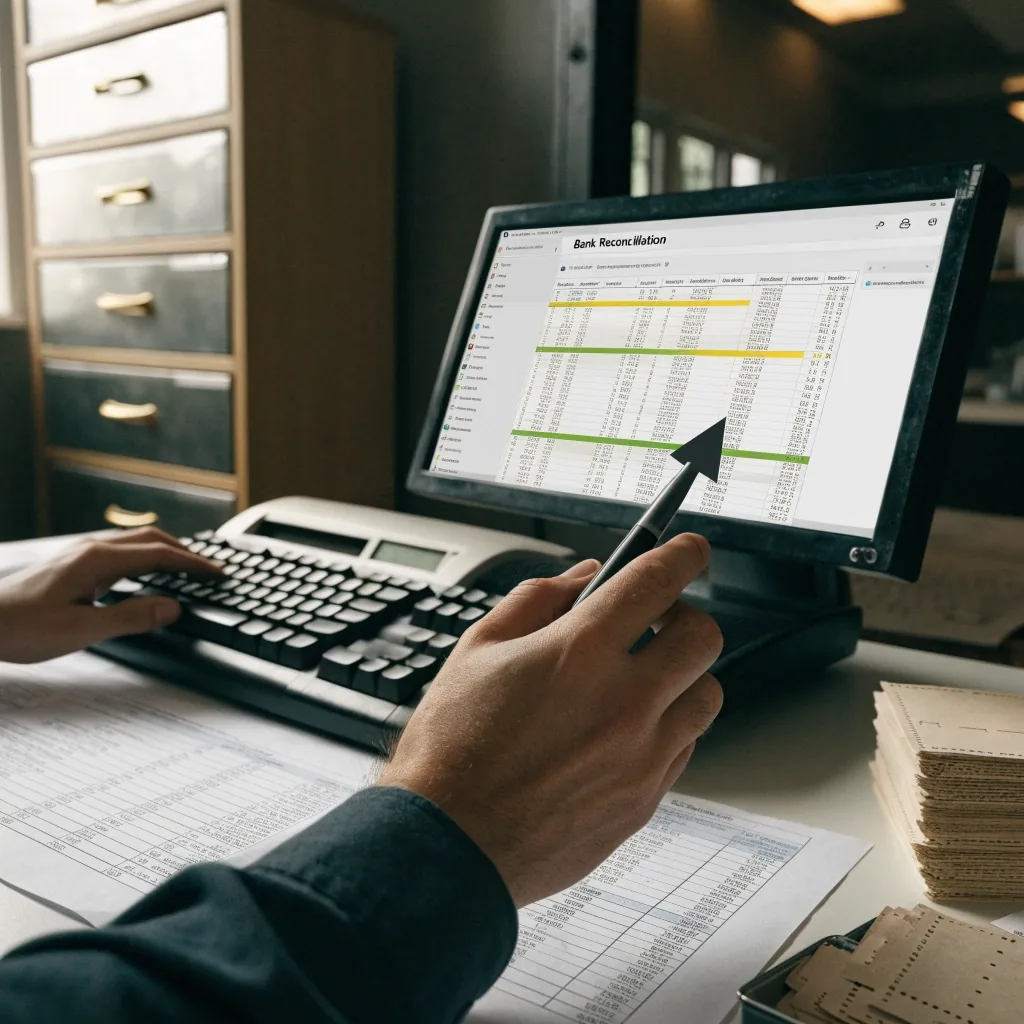
Reconciliation is where the GST figure is either trusted or rebuilt by hand
Vendor questions
Ask each vendor four things, and ask for the answer in writing. Verbal reassurance during a sales call is not something you can hold a platform to at your first filing.
The answers separate platforms that were built for Singapore from platforms that were adapted for it.
Questions to ask before you choose
- Can the platform send and receive InvoiceNow e-invoices natively, or only through a partner?
- A partner route is workable, but find out who you contact when a structured invoice fails, and whether that sits inside your support agreement.
- Does the GST report map to the IRAS filing format out of the box?
- Ask to see the report on a demo dataset with a mix of standard-rated, zero-rated and exempt transactions, not on a clean sample.
- Does the chart of accounts setup account for GST from the start?
- Tax codes assigned at setup stay assigned. Tax codes bolted on later mean every transaction before that point needs review.
- What does the migration do with historical transactions that predate your cloud setup?
- Opening balances and prior-period GST treatment are the two places a migration quietly goes wrong.
Platform notes
How the platforms we cover approach it
The platforms in our comparison differ here. Verify current capabilities with each vendor, because these features change — a statement from two years ago is not a statement about today.
AutoCount
Operational focus, Singapore presence
Built for businesses whose transactions start in POS or operational systems rather than in a monthly bookkeeping routine.
MYOB Business
General small-business tool
Widely used and well understood by bookkeepers, with varying depth on Singapore e-invoicing depending on the edition.
FreshBooks
Clean invoicing first
Strong on the invoice side of the workflow; check the Singapore filing side specifically rather than assuming it.
SleekBooks
Bundled with a compliance service
GST and bookkeeping support arrive together, which suits owners who would rather not assemble the stack themselves.
Oracle NetSuite
Complex reporting, different scale
Handles multi-entity reporting well, but it is aimed at a different scale of business than a single-entity SME.
Setting up your chart of accounts for GST
The chart of accounts is where GST readiness is won or lost. If tax codes are not assigned at setup, every transaction after that needs review. If your accounts are structured for a business that does not charge GST, adding it later means reworking classifications.
Before implementation, decide whether you are GST-registered, whether you expect to cross the threshold, and how you want to group revenue and expenses for reporting. A little planning at the chart-of-accounts stage saves a lot of cleanup at the first filing.
Assigning tax codes at setup takes an afternoon. Reclassifying a year of transactions takes a filing cycle, and it usually lands in the same week as the deadline.
A readiness checklist
What to confirm before you commit
GST status
Confirm GST registration status and filing frequency before the chart of accounts is built.
Buyer expectation
Confirm whether InvoiceNow is required by your customers or simply expected in your sector.
Written support
Ask the vendor for a written statement of Singapore GST and InvoiceNow support, dated and tied to your edition.
Demo test
Test the GST report on a demo dataset with mixed transaction types, not on a clean sample.
Ownership
Decide who owns the chart-of-accounts setup — a named person, not a shared assumption.
Migration plan
Plan the migration for historical data, not just going-forward transactions.
Common readiness mistakes
Three mistakes come up often. Choosing software on price alone and discovering e-invoicing is a paid add-on. Assuming the vendor's global GST features cover Singapore specifically. And deferring InvoiceNow until a large customer requires it, at which point you are retrofitting under time pressure.
Each of these is avoidable with a short checklist and a demo on real transaction types. None of them require technical knowledge to avoid — they require asking the question before the contract, not after.
What changes after go-live
Once you are live, the ongoing work is reconciliation and review. Bank reconciliation keeps transactions matched to records, which keeps GST figures accurate between filings. Multi-factor authentication controls who can access and change records. Real-time reporting means you can check your GST position any day rather than reconstructing it at quarter end.
None of this is exotic, but it depends on the setup decisions made before go-live. The support arrangement matters here too: when a filing week goes wrong, you want a named route to help rather than a ticket queue.
Straight answers
Common questions
Is InvoiceNow mandatory for all Singapore businesses?
Not for all. It is increasingly required by larger customers and expected in some sectors. Check whether your buyers need structured e-invoices before deciding it can wait.
Can I add InvoiceNow later?
Often yes, but it is more disruptive than choosing for it up front, especially if it means changing platforms or adding modules under time pressure.
Does global GST support cover Singapore?
Not necessarily. Singapore GST reporting has its own filing format. Confirm the vendor supports it specifically rather than assuming a global tax module reaches the Singapore schedule.
How do I ask a readiness question about my own setup?
Write down how your invoices reach customers, whether you are GST-registered, and which platform you are considering. That is enough for a useful answer — send it through the contact page and we will reply with the specific checks for your situation.
Registered and supported
An independent resource, with a real support route
Ephunaro Cloud Accounting Pte. Ltd. is an independent editorial resource for Singapore businesses comparing cloud accounting software, GST and InvoiceNow readiness, and implementation support options. We do not sell licences directly — we help you work out which platform fits your transaction mix, then point you at the vendor and the implementation path.
The company is registered in Singapore, and the support desk is staffed during the hours below. If you are mid-selection and a filing deadline is close, say so when you write — that changes the order of the checks.
Ephunaro Cloud Accounting Pte. Ltd.
71 Robinson Road, #14-01
Singapore 068895
Support hours
Monday to Friday, 9:00 AM – 6:00 PM (SGT)
Saturday, 10:00 AM – 2:00 PM (SGT)